Solid steel shop shutters for shops in Fleet
Shops in the GU51 postcode district range from convenience stores to takeaways, salons and specialist retailers. We tailor solid steel shop shutters to the stock you hold and the hours you open, and say plainly where a different option would serve you better.
Before quoting in Fleet, we confirm who owns the frontage, whether the lease restricts external alterations and whether the building is listed or in a conservation area. Sorting that early avoids paying for something that cannot be fitted.
We also work in Farnborough and Aldershot, so a visit in Fleet can usually be fitted around others in Hampshire.
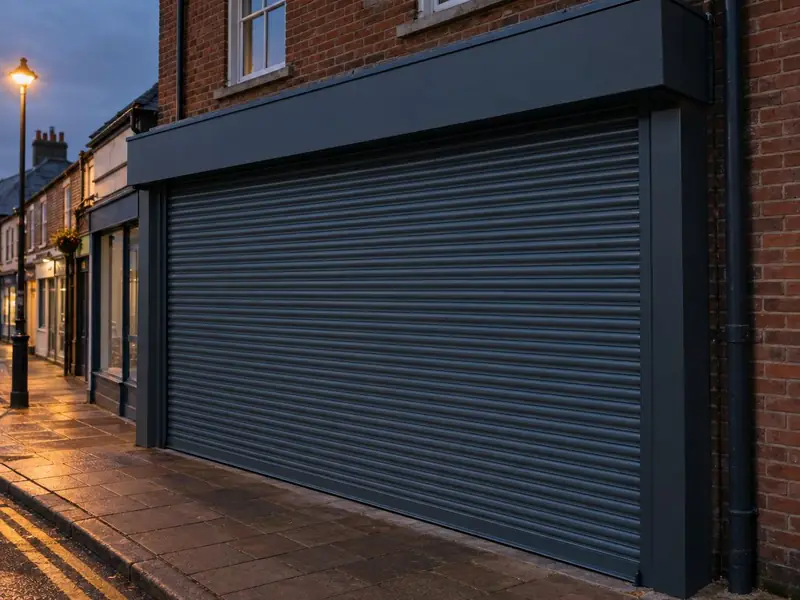
What our solid steel shop shutters include
Full-cover galvanised steel laths for maximum privacy and weather protection.
- Face-fit, under-fascia or concealed behind the fascia
- Optional key switch, remote or timer on electric versions
- Lockable bottom rail with ground or side locks
- Manual (crank or push-up) or electric operation
| Vision | No vision panels, fully solid |
|---|---|
| Typical box | 205–300 mm depending on drop |
| Curtain | Roll-formed galvanised steel laths, 75–77 mm |
More detail on our solid steel shop shutters page.
Guide prices
| Option | Guide price ex VAT | Inc VAT |
|---|---|---|
| Solid steel, electric, box hidden behind the fascia | £1,995–£3,495 | £2,394–£4,194 |
| Solid steel, electric, face-fit box Recommended | £1,495–£2,695 | £1,794–£3,234 |
| Solid steel, manual | £895–£1,495 | £1,074–£1,794 |
Guide prices, supply and fit, for a typical shopfront about 3 m × 2.5 m unless stated. Your fixed price is confirmed in writing after a free survey, before any work starts.
Consents for shopfronts in Fleet
In England, an external shutter on a shopfront is normally treated as development that needs planning permission from your local planning authority, because it changes how the building looks. There is no permitted development right for shop shutters. Internal shutters fitted behind the glass usually sit outside planning control.
Listed buildings need listed building consent for works affecting their character, inside or out, and conservation areas bring closer scrutiny of the design. Many councils publish a shopfront design guide that prefers perforated, punched or internal shutters with the box hidden behind the fascia.
From enquiry to handover
Get in touch
Give us the postcode and what you are after. We confirm a survey slot and anything we need beforehand.
Measure and check
We confirm sizes, fixings and power on site, and note anything that affects planning or the box position.
Quote in writing
We send the specification and a fixed price in writing, with a deposit only on acceptance.
Installation and handover
We fit the shutter, test it with you, explain daily use and the override, and hand over warranty and service details.
Solid steel shop shutters in Fleet: questions
Is the survey free in Fleet?
The survey and written quote are free for new shutters in Fleet. Repair and service visits are charged, with a diagnostic visit from £125 ex VAT, and we tell you the cost before we attend.
Will I need planning permission for a shutter in Fleet?
An external shutter normally needs planning permission from the local planning authority, while internal shutters behind the glass usually do not. Listed buildings and conservation areas need extra care. We provide the shutter specification for your application.
Is a solid shutter more secure than a perforated one?
Not automatically. Security depends on the lath gauge, the guides, the bottom-rail locking and how the shutter is fixed. A solid curtain hides the interior, which deters opportunists, but a well-specified perforated shutter can resist the same tools. If your insurer names a rating, we quote a certified product.
Do solid shop shutters need planning permission?
An external solid shutter usually needs planning permission because it changes how the shopfront looks, and many councils prefer perforated, punched or internal shutters in town centres. We provide the shutter specification for your application, and the final decision always sits with your local planning authority.