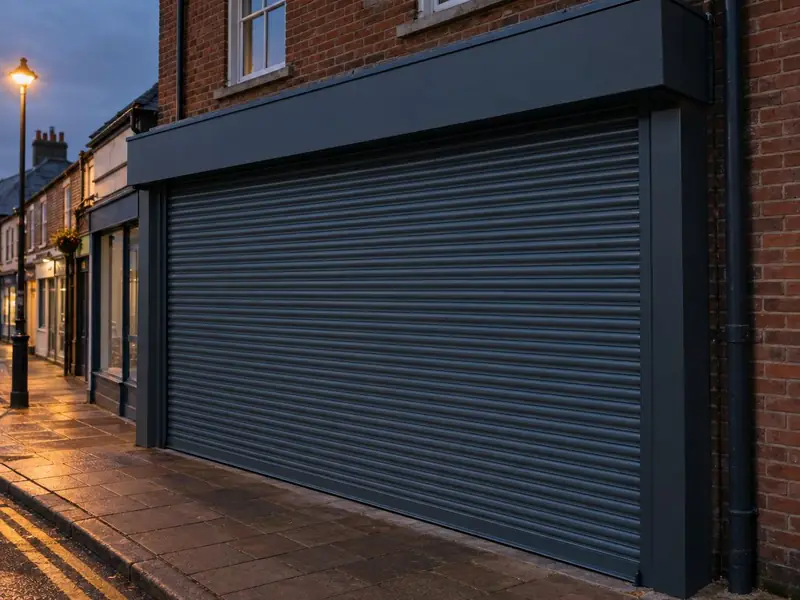
What is a solid shop shutter made of?
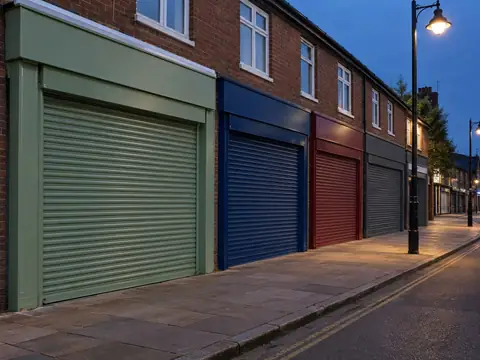
The curtain is a run of roll-formed steel laths, usually 75 mm or 77 mm deep, hooked into each other so the curtain can coil around a barrel in the box above the opening. The steel is galvanised as standard and can be powder coated to a RAL colour. A heavier bottom rail closes onto the ground, and the curtain runs in steel guide rails fixed either side of the opening.
Because nothing can be seen through it, a solid shutter also stops the glass being targeted and hides displays from passers-by. That is the reason many councils resist solid external shutters on traditional high streets: a row of blank steel fronts deadens the street after closing.
When does a solid shutter make sense?
Solid laths are the usual choice for back doors, service yards, units on retail parks, rear loading openings and shopfronts outside sensitive planning areas where privacy matters more than an after-hours display. They also suit premises that have suffered glass breakage, because nothing can be thrown through the curtain.
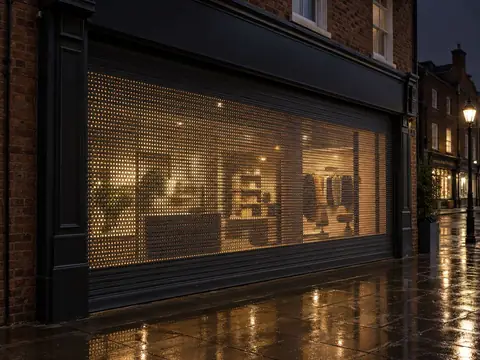
Where your council expects a see-through finish, the same shutter can be specified with perforated laths or punched vision laths without changing the box or guides.
What's included
- Galvanised steel laths, single-wall as standard, double-wall on request
- Manual (crank or push-up) or electric operation
- Face-fit, under-fascia or concealed behind the fascia
- Finished galvanised, or powder coated to a RAL colour
- Lockable bottom rail with ground or side locks
- Wind locks and end stops to keep the curtain in its guides
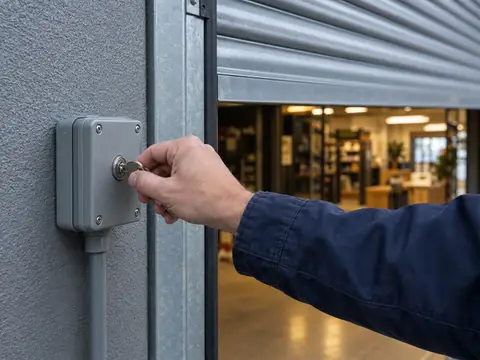
- Optional key switch, remote or timer on electric versions
- Manual override fitted to electric shutters
Specification at a glance
| Curtain | Roll-formed galvanised steel laths, 75–77 mm |
|---|---|
| Vision | No vision panels, fully solid |
| Operation | Manual or electric |
| Finish | Galvanised or powder coated (RAL) |
| Typical box | 205–300 mm depending on drop |
How much do solid steel shop shutters cost?
| Option | Guide price ex VAT | Inc VAT |
|---|---|---|
| Solid steel, electric, box hidden behind the fascia | £1,995–£3,495 | £2,394–£4,194 |
| Solid steel, electric, face-fit box Recommended | £1,495–£2,695 | £1,794–£3,234 |
| Solid steel, manual | £895–£1,495 | £1,074–£1,794 |
Guide prices, supply and fit, for a typical shopfront about 3 m × 2.5 m unless stated. Your fixed price is confirmed in writing after a free survey, before any work starts.
See every option on our price guide, or use the guide-price tool with your own measurements.
Questions shop owners ask
Do solid shop shutters need planning permission?
An external solid shutter usually needs planning permission because it changes how the shopfront looks, and many councils prefer perforated, punched or internal shutters in town centres. We provide the shutter specification for your application, and the final decision always sits with your local planning authority.
Is a solid shutter more secure than a perforated one?
Not automatically. Security depends on the lath gauge, the guides, the bottom-rail locking and how the shutter is fixed. A solid curtain hides the interior, which deters opportunists, but a well-specified perforated shutter can resist the same tools. If your insurer names a rating, we quote a certified product.
Can a solid shutter be painted to match my shopfront?
Yes. The laths, guides and box can be powder coated to a RAL colour at the factory, which lasts far longer than painting on site. Colour-matching to the shopfront frame is often welcomed by planning officers.
How long does fitting take?
Most single shopfront shutters are fitted in a day once made. Larger openings, concealed boxes or electrical work can add time, and we confirm the plan in writing after the survey.
Will a solid shutter rust?
Galvanised steel resists corrosion well, and powder coating adds a further barrier. Coastal sites and damaged coatings need more attention, which is why we suggest an annual service.