Solid steel shop shutters across Staffordshire
Repairs and servicing are available across Staffordshire too, on most makes of shutter, so one company can look after your shutters long after they are fitted.
Councils across Staffordshire each apply their own shopfront policies, so what is acceptable on one high street may be resisted on the next. We take that into account when we recommend a curtain, box position and colour, and we provide the specification for your application.
Each shutter is made to measure before the fitting visit, so most single shopfronts in Staffordshire are fitted in one day once planning and landlord consent are in place.
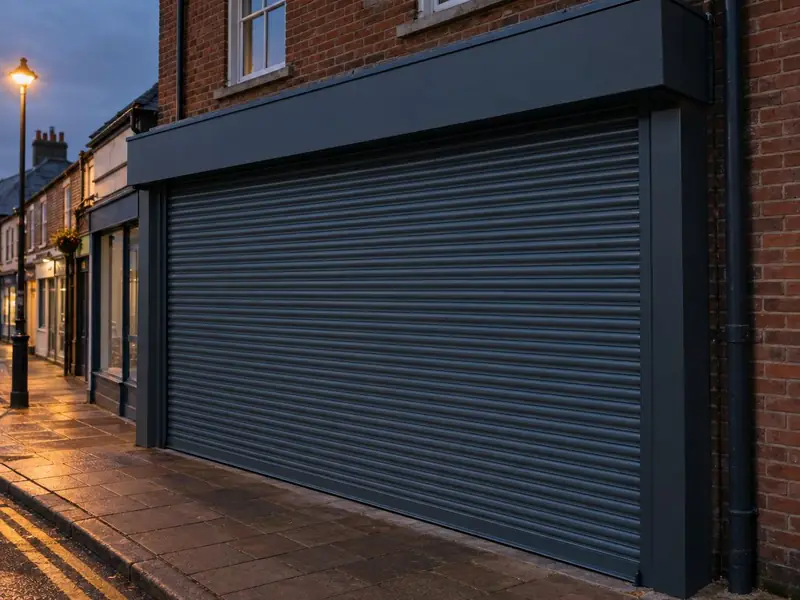
Solid steel shop shutters: what you get
Full-cover galvanised steel laths for maximum privacy and weather protection.
- Manual (crank or push-up) or electric operation
- Finished galvanised, or powder coated to a RAL colour
- Face-fit, under-fascia or concealed behind the fascia
- Optional key switch, remote or timer on electric versions
- Wind locks and end stops to keep the curtain in its guides
| Typical box | 205–300 mm depending on drop |
|---|---|
| Finish | Galvanised or powder coated (RAL) |
| Curtain | Roll-formed galvanised steel laths, 75–77 mm |
| Operation | Manual or electric |
More detail on our solid steel shop shutters page.
Prices for solid steel shop shutters in Staffordshire
| Option | Guide price ex VAT | Inc VAT |
|---|---|---|
| Solid steel, electric, box hidden behind the fascia | £1,995–£3,495 | £2,394–£4,194 |
| Solid steel, electric, face-fit box Recommended | £1,495–£2,695 | £1,794–£3,234 |
| Solid steel, manual | £895–£1,495 | £1,074–£1,794 |
Guide prices, supply and fit, for a typical shopfront about 3 m × 2.5 m unless stated. Your fixed price is confirmed in writing after a free survey, before any work starts.
Do shutters in Staffordshire need planning permission?
English councils generally expect a planning application before an external roller shutter goes on a shopfront, since the shutter alters the appearance of the building; shop shutters have no permitted development right. A shutter installed inside, behind the glazing, does not usually need permission.
If the building is listed, listed building consent is needed as well, and in a conservation area the council will look harder at the curtain type, box position and colour. A council shopfront guide, where one exists, is the best place to start.
How it works
Get in touch
Give us the postcode and what you are after. We confirm a survey slot and anything we need beforehand.
Survey on site
A surveyor measures up, photographs the frontage and checks headroom, side room and the ground the shutter closes onto.
Agree the price
Your written quote sets out exactly what is included. Payment terms on installations are 50% deposit, 40% on the first day of fitting and 10% on completion.
Made, fitted, explained
The shutter is made to measure and fitted, then we show you how to use it and the manual override, and leave the paperwork.
Solid steel shop shutters in Staffordshire: questions
Is the survey free in Staffordshire?
The survey and written quote are free for new shutters in Staffordshire. Repair and service visits are charged, with a diagnostic visit from £125 ex VAT, and we tell you the cost before we attend.
Will I need planning permission for a shutter in Staffordshire?
An external shutter normally needs planning permission from the local planning authority, while internal shutters behind the glass usually do not. Listed buildings and conservation areas need extra care. We provide the shutter specification for your application.
How long does fitting take?
Most single shopfront shutters are fitted in a day once made. Larger openings, concealed boxes or electrical work can add time, and we confirm the plan in writing after the survey.
Do solid shop shutters need planning permission?
An external solid shutter usually needs planning permission because it changes how the shopfront looks, and many councils prefer perforated, punched or internal shutters in town centres. We provide the shutter specification for your application, and the final decision always sits with your local planning authority.