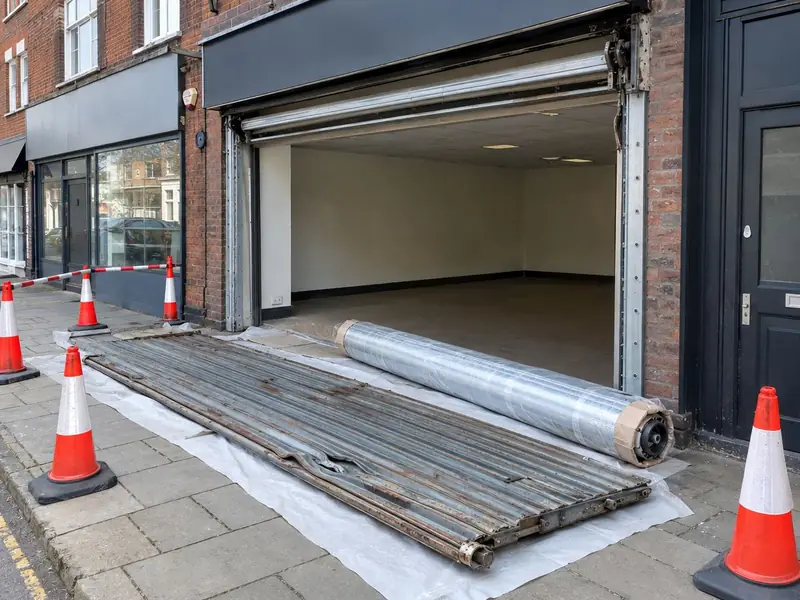
What is a typical lifespan for a shop shutter?
There is no fixed figure, but a well-made electric shop shutter that is installed properly and serviced regularly typically gives somewhere around 10 to 20 years of use. Some last longer; others need replacing well before that because of damage, heavy use or neglect.
It helps to think of a shutter as a set of parts with different lives rather than one product. The steel curtain, guides and box can last many years. Moving and electrical parts, such as the motor, the controls, remotes, safety edges and bearings, wear sooner and are usually replaced along the way. A shutter often reaches the end of its life when the curtain and guides are too worn or damaged to justify further repairs.
Which parts wear out first?
| Part | What affects its life | Warning signs |
|---|---|---|
| Motor and brake | Curtain weight, number of cycles, overheating | Slow running, humming, frequent cut-outs |
| Limit settings | Vibration, wear, power interruptions | Stopping short or overrunning |
| Controls and remotes | Weather, vandalism, daily handling | Intermittent response, sticking key switch |
| Safety edge and photocells | Impacts, dirt, cable damage | Curtain reversing for no clear reason |
| Springs (manual shutters) | Number of cycles, original tension | Curtain heavier to lift or not staying up |
| Bearings | Load, lubrication, age | Squeaking or grinding from the box |
| Curtain laths and end locks | Impacts, corrosion, forcing | Dents, uneven running, laths shifting sideways |
| Guides and bottom rail | Vehicle knocks, corrosion, grit | Rough running, curtain catching |
A motor replacement has a guide price of £395–£895, ex VAT, and can give an otherwise sound shutter many more years of use.
What shortens a shutter's life?
- Heavy use. A shutter run several times a day for deliveries usually wears out sooner than one opened and closed once each day.
- Under-specified parts. A motor or barrel sized for a smaller curtain works harder and fails sooner.
- Impacts. Vehicles, trolleys and kicks bend laths and guides, which strains the motor every cycle afterwards.
- Weather and pollution. Coastal salt, road salt and grime speed up corrosion, especially on the bottom rail and guides.
- Forcing. Pulling a curtain down by hand, prising up a frozen bottom rail or repeatedly pressing the button when it has stopped all cause damage.
- Skipped servicing. Small problems, such as a loose fixing or a dry bearing, grow into bigger ones.
Does the type of shutter make a difference?
It can. Galvanised steel curtains are tough and resist impacts well, but scratches can eventually let corrosion in, particularly in coastal areas. Aluminium does not rust in the same way and is lighter, which eases the load on the motor, but it dents more easily than steel. A powder-coated finish adds a protective layer and makes cleaning easier.
Manual shutters have no motor or controls to fail, but their springs lose tension over time and eventually need replacing. Internal shutters are sheltered from weather and often suffer less corrosion than external ones. Security-rated shutters use heavier components, which can be more robust, although the motor must be sized for the extra weight.
How can I make a shutter last longer?
- Have it serviced at least once a year, and more often if it is used heavily or is exposed to the weather.
- Keep the guides and the ground under the bottom rail clear of litter, grit and ice.
- Wash the curtain occasionally with mild detergent and water, avoiding pressure-washing into the box or guides.
- Train staff to watch the shutter as it moves, never to force it and not to run it repeatedly in quick succession.
- Report new noises, uneven running or damage straight away.
- Protect the shutter from vehicles, for example with bollards in a service yard.
Our service visits start from £125 per shutter, ex VAT, and include a written record of what was checked.
Should I repair or replace an old shutter?
Repair is usually sensible when the curtain, guides and box are sound and the fault is in a replaceable part, such as the motor, controls, a few damaged laths or a safety device. Replacement starts to make more sense when:
- repairs are becoming frequent and the costs are adding up;
- the curtain is badly dented, corroded or running unevenly across its whole width;
- the guides or box are damaged or corroded beyond repair;
- parts for the motor or controls are no longer available;
- the shutter lacks safety features expected today and upgrading it would cost a large share of a new one;
- you need something the old shutter cannot provide, such as a perforated curtain for planning, a security rating for your insurer or electric operation.
A diagnostic visit, from £125, gives you the information to decide.
What does replacing a shutter cost?
A replacement costs the same as a new shutter of the chosen type, plus strip-out and disposal of the old one, which has a guide price of £95–£195. For a typical shopfront of about 3 m by 2.5 m, an electric solid steel shutter has a guide price of £1,495–£2,695, ex VAT. Other types are set out in our price guide.
Before replacing an external shutter, check whether the new design needs planning permission. If you are changing the lath type, colour or box position, it may well do.
How do I know how old my shutter is?
Look for a label on the motor, the box, the guides or the controls, which may show the manufacturer, model or date. Installation invoices, lease schedules and previous service reports can also help. If none of these exist, a technician can usually give a rough idea from the type of motor and the condition of the components. Recording the details at your next service makes future decisions easier.
How should I plan for replacement?
Shutters rarely fail without warning, so it is worth planning the replacement rather than waiting for a breakdown that leaves the shop unsecured. Useful steps include:
- ask the technician at each service for an honest view of the shutter's condition and the likely remaining life of its main parts;
- keep a running total of repair costs, so you can see when they start to approach the cost of a new shutter;
- if you are leasing, check the lease for who is responsible for replacing the shutter and in what condition it must be handed back;
- allow time for planning permission if the new shutter will look different from the old one;
- consider timing the replacement with other shopfront work, such as new signage or glazing, to avoid disturbing the frontage twice.
Our replacement shutters page explains how strip-out and fitting are usually arranged to keep the shop secure.
Questions about this guide
How long does a shutter motor last?
It depends on the motor's rating, the weight of the curtain, how often the shutter runs and how well it is maintained. A correctly sized motor on a lightly used shutter can last many years, while one running a heavy curtain several times a day may need replacing sooner. Replacement has a guide price of £395–£895, ex VAT.
Do manual shutters last longer than electric ones?
They have fewer parts that can fail, because there is no motor, controls or safety electronics. Their springs still wear out and need replacing, and a heavy manual curtain can suffer if it is forced or dropped. Overall lifespan depends more on build quality, use and maintenance than on whether the shutter is manual or electric.
Can an old shutter be refurbished instead of replaced?
Often, yes, if the main structure is sound. Refurbishment can include a new motor, controls, safety devices, replacement laths, new bearings or re-aligned guides. If the curtain and guides are badly worn or corroded, refurbishing may cost close to a new shutter, and replacement is usually better value.
Does regular servicing really extend a shutter's life?
Servicing does not stop wear, but it catches problems early, such as loose fixings, dry bearings, misaligned guides or drifting limits, before they cause further damage. A shutter that is checked and adjusted regularly is less likely to suffer the sort of breakdown that damages the curtain or motor.
Sources
- Maintenance of work equipment (HSE)
- Provision and Use of Work Equipment Regulations 1998, regulation 5
- BS EN 13241: Industrial, commercial and garage doors and gates product standard (BSI)
This guide is general information, not legal advice. Your local planning authority, landlord and insurer have the final say on your premises.