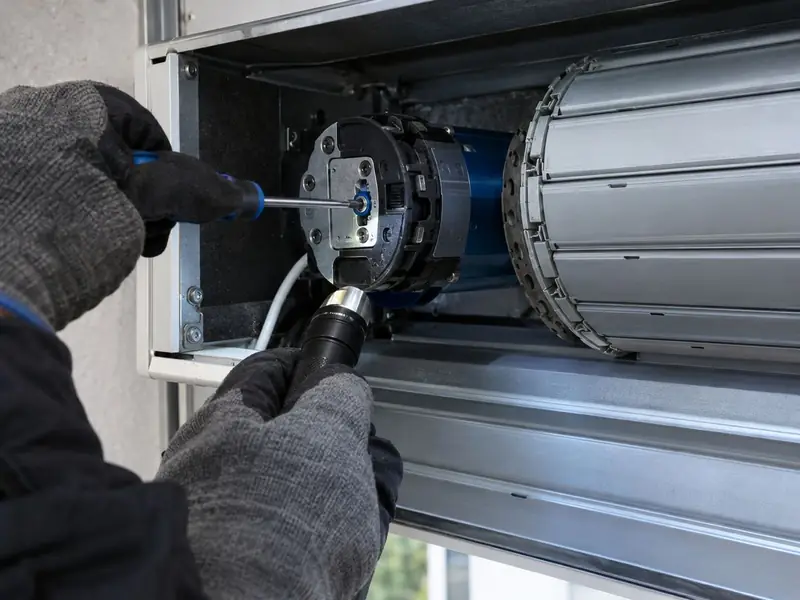
Which rules apply to an electric shop shutter?
Several sets of rules overlap, each covering a different stage in the shutter's life:
| Rule | What it covers |
|---|---|
| BS EN 13241 | Product standard for industrial, commercial and garage doors and gates, including retail shutters and grilles; the basis for UKCA or CE marking |
| BS EN 12453 | Safety in use of powered doors, including force limits and protective devices |
| Supply of Machinery (Safety) Regulations 2008 | Duties when a powered door is supplied or put into service |
| Workplace (Health, Safety and Welfare) Regulations 1992, regulation 18 | Doors and gates in workplaces must be suitably constructed, with any necessary safety devices |
| Provision and Use of Work Equipment Regulations 1998 (PUWER) | Work equipment must be maintained and used safely by trained people |
| Electricity at Work Regulations 1989 and BS 7671 | Safe electrical systems and installation |
Northern Ireland has its own equivalent regulations; see the nation notes below.
What safety features does the law expect?
Regulation 18 of the Workplace Regulations sets out specific expectations for doors and gates in workplaces. Among them:
- upward-opening doors need a safeguard against falling back;
- powered doors need effective features to prevent people being trapped;
- powered doors must be able to be operated manually where that is necessary for safety, unless they open automatically if the power fails.
BS EN 12453 sets out how to achieve this in practice, for example through hold-to-run controls with a clear view of the shutter, force limits that are tested on site, safety edges on the bottom rail and photocells across the opening. HSE has advised that following the standard alone may not be enough and that each installation should be risk assessed for its own site, including the risk of a vertically moving curtain falling if a suspension part fails.
What should an installer hand over with a new powered shutter?
When a new powered shutter is supplied and put into service, you should expect to receive:
- instructions for safe use, including how to use the manual override;
- maintenance instructions setting out what should be checked and how often;
- a declaration of conformity and the product marking on the shutter;
- details of the safety devices fitted and the controls specified;
- a record of commissioning checks, such as force tests where they apply.
Keep these documents with your premises records. They make future servicing easier and help show that the shutter was safe when it was put into use.
What do shop owners and employers have to do?
Under PUWER, employers must make sure work equipment is maintained in an efficient state, in efficient working order and in good repair, and that any maintenance log is kept up to date. A shutter that staff open and close every day is work equipment. In practice, that means:
- using competent people for maintenance and repairs;
- showing staff how to operate the shutter and its override safely;
- taking a faulty or damaged shutter out of use until it is repaired;
- making sure the shutter is isolated from power before anyone works on it.
Where a landlord owns the shutter and a tenant runs the shop, who does what depends on the lease. Agree responsibility in writing, because the employer's duties to staff apply whatever the lease says.
How often should a shop shutter be serviced?
The law sets duties rather than a fixed timetable, so follow the manufacturer's maintenance instructions. The normal recommendation for a shop shutter is a service at least once a year.
More frequent servicing, such as every six months, is worth considering where:
- the shutter is opened and closed several times a day, for example for deliveries;
- it is large, heavy or exposed to coastal weather or road salt;
- it has been damaged before or has a history of faults;
- the public walk close to it while it moves.
Your insurer may also set its own conditions about keeping security devices in good working order. Our shutter servicing starts from £125 per shutter, ex VAT.
What does a service visit check?
A thorough service of an electric shop shutter typically covers:
- fixings of the box, brackets and guides;
- the curtain, end locks and bottom rail for damage and wear;
- guides for alignment, wear and debris;
- barrel bearings and, on manual shutters, spring tension;
- the motor, brake and limit settings;
- controls, key switches and remotes;
- safety edges and photocells, and force checks where relevant;
- the manual override and any fall-protection device;
- lubrication where the manufacturer specifies it.
You should receive a written record of what was checked, what was found and anything recommended. If parts are worn, a repair can be quoted separately.
What can staff check between services?
Simple, regular checks can catch problems early without anyone touching the mechanism:
- watch the shutter as it moves and listen for new noises;
- keep the guides and the area under the bottom rail clear;
- keep photocell lenses clean and unobstructed;
- check that the curtain sits level and reaches the ground;
- look for loose fixings, damaged laths or a damaged safety edge.
If anything looks wrong, stop using the shutter and report it. Our guide on what to check when a shutter will not move covers safe first steps.
What records should I keep?
A simple log for each shutter is enough: the installation documents, the date of each service and who carried it out, faults reported and how they were fixed, and any changes such as a new motor or extra safety devices. Records help you plan maintenance, support insurance claims and show that duties under PUWER have been taken seriously. Where a maintenance log exists, PUWER requires it to be kept up to date.
Who can work on the electrics?
Electrical supply and connection work should be done by a competent person and installed and tested to BS 7671. The Electricity at Work Regulations 1989 require electrical systems in workplaces to be safe and maintained. A local isolator that can be locked off allows the shutter to be made safe before servicing or repairs.
In England and Wales, Part P of the Building Regulations covers electrical work in dwellings and does not apply to shops; Scotland and Northern Ireland have no Part P, and their building regulations deal with electrical safety in their own way. If the shop shares an electricity supply with a flat above, ask your electrician whether any domestic rules also apply to that part of the work.
How the rules differ across the UK
England
The Workplace (Health, Safety and Welfare) Regulations 1992, PUWER 1998 and the Electricity at Work Regulations 1989 apply. For most shops, health and safety law is enforced by the local council's environmental health team, with HSE responsible for other types of workplace. New powered shutters are supplied under the Supply of Machinery (Safety) Regulations 2008, with UKCA marking, or CE marking where it is recognised in Great Britain.
Wales
Health and safety at work is not devolved, so the same Great Britain regulations apply in Wales as in England: the Workplace Regulations 1992, PUWER 1998 and the Electricity at Work Regulations 1989. Enforcement for shops is usually by the local council, with HSE covering other workplaces. Product supply rules are the same as in England.
Scotland
The same Great Britain regulations apply in Scotland: the Workplace Regulations 1992, PUWER 1998 and the Electricity at Work Regulations 1989. Most shops are inspected by the council's environmental health service, with HSE covering other workplaces. Product supply rules are the same as in England and Wales.
Northern Ireland
Northern Ireland has its own equivalent regulations: the Workplace (Health, Safety and Welfare) Regulations (Northern Ireland) 1993, the Provision and Use of Work Equipment Regulations (Northern Ireland) 1999 and the Electricity at Work Regulations (Northern Ireland) 1991. Enforcement is shared between the Health and Safety Executive for Northern Ireland and the district councils. Product marking rules differ, and CE marking remains the main mark for goods placed on the Northern Ireland market.
Questions about this guide
Is annual servicing a legal requirement?
Not as a fixed interval. The law requires employers to keep work equipment maintained in an efficient state, in efficient working order and in good repair, and to make sure powered doors are safe. An annual service is the usual way to show that, and many manufacturers recommend it. Heavily used shutters may need more frequent visits.
Do older shutters need upgrading to current standards?
Standards are not generally retrospective, but the duty to keep a shutter safe continues for its whole life. HSE has advised that existing powered doors should be reassessed against current knowledge. If a service finds a risk, such as no protection against trapping, extra safety devices may be recommended to bring the shutter up to a safe condition.
Can our caretaker service the shutter?
Cleaning and simple visual checks, yes. Work on springs, the barrel, the motor, limit settings, safety devices or electrics needs someone with the right training and equipment, because PUWER requires maintenance to be carried out by competent people. Stored spring energy and mains electricity can cause serious injury if handled wrongly.
Is the landlord or the tenant responsible for servicing?
It depends on the lease and on who controls the shutter. Many shop leases make the tenant responsible for the shopfront and its fittings, but some landlords keep responsibility for shutters. Whoever arranges servicing, an employer still has duties to staff who use the shutter, so agree the arrangement in writing.
Sources
- Revision of standards for powered doors, gates and barriers (HSE safety bulletin)
- Workplace (Health, Safety and Welfare) Regulations 1992, regulation 18
- Maintenance of work equipment (HSE)
- Supply of Machinery (Safety) Regulations 2008
- Workplace (Health, Safety and Welfare) Regulations (Northern Ireland) 1993
This guide is general information, not legal advice. Your local planning authority, landlord and insurer have the final say on your premises.