How do manual and electric shutters work?
On a manual shutter, the curtain is balanced by springs inside the barrel, so it can be pushed up or pulled down by hand using a pole or handle. Larger manual shutters may use a gearbox wound with a removable crank handle, or an endless hand chain, instead of a direct push. Manual shutters are usually locked at the bottom rail, with locks into the guides or a padlocked bar into the ground.
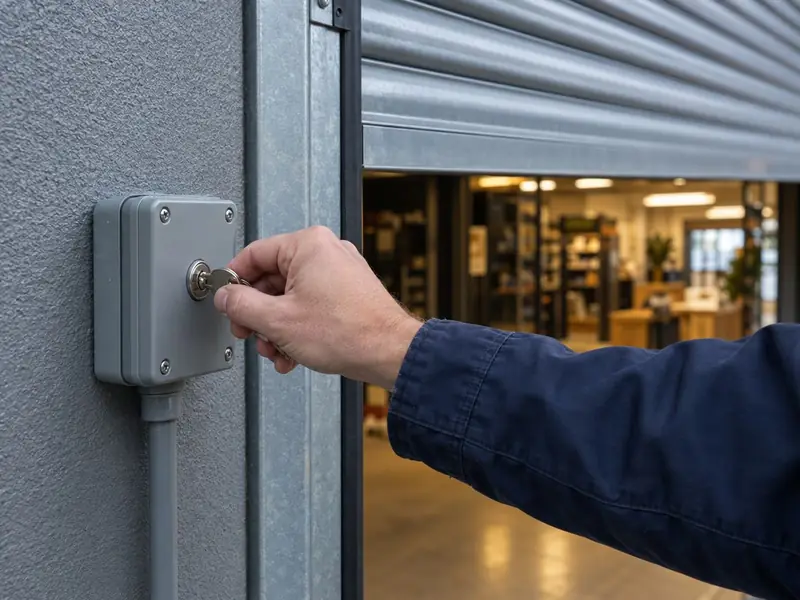
On an electric shutter, a motor raises and lowers the curtain. Most shop shutters use a tubular motor inside the barrel; heavier shutters may use an external motor on the end of the barrel. Controls include an outside key switch, a remote handset, a push button inside, or a combination. Limit settings tell the motor where to stop at the top and bottom.
How do they compare?
| Factor | Manual | Electric |
|---|---|---|
| Daily effort | Lifting, pulling and bending to locks | Press and hold, or a remote |
| Best suited to | Smaller openings, occasional use | Larger openings, daily use |
| Power needed | No power supply needed | A fused supply near the box |
| Main wearing parts | Springs, locks, bearings | Motor, controls, limits, bearings |
| Behaviour in a power cut | Unaffected | Needs the manual override |
| Guide price (ex VAT) | £895–£1,495 | £1,495–£2,695 |
How heavy is a manual shutter to operate?
A well-balanced manual shutter should rise with steady pressure rather than a heave, but the effort increases with size, and springs lose tension over the years. On a wide shopfront, staff may be pushing a heavy curtain overhead, then crouching at pavement level in the rain to work the locks.
That matters for health and safety as well as convenience. Manual handling is a workplace risk, and an awkward shutter used twice a day by different people can add up. If staff struggle, have the spring tension checked by a technician, which is not a job to attempt yourself, or consider converting the shutter to electric.
Is an electric shutter more secure than a manual one?
It can be harder to attack in some ways. The motor and its brake help hold the curtain down, and there are no exposed padlocks or bottom locks to cut, freeze or fill with glue. Many electric shutters can also be fitted with anti-lift devices that resist the curtain being forced upwards.
The weak points move rather than disappear. An outside key switch needs to be tamper-resistant, remotes need managing when staff leave, and the shutter's resistance to attack still depends on the laths, guides, bottom rail and fixings. If security is the priority, look at a tested product; our LPS 1175 guide explains the ratings.
What safety features does an electric shutter need?
A powered shutter can trap or strike someone, so its safety in use is assessed against BS EN 12453. In practice, the right measures depend on how the shutter is controlled and who is around it:
- Hold-to-run controls, where the shutter only moves while the button or key is held and the operator can see the curtain, are common on shopfronts.
- Safety edges on the bottom rail stop or reverse the curtain on contact.
- Photocells across the opening stop the curtain if the beam is broken.
- Remote or automatic operation, where the operator may not see the opening, generally calls for more protection, such as safety edges and photocells.
We specify the controls and safety devices to suit how you will use the shutter. Our safety and servicing guide covers the legal duties in more detail.
What power supply does an electric shutter need?
Most shop shutter motors run from a standard single-phase supply, connected through a fused spur or isolator close to the box so the shutter can be switched off safely for servicing. Some heavy or industrial motors use three-phase power, but this is unusual on a typical shopfront.
The supply should be installed and tested by a competent electrician to BS 7671, and the Electricity at Work Regulations 1989 apply to electrical systems in workplaces. If there is no supply near the shopfront, we note the route at the survey so the cost of a new circuit can be included in your plans.
What happens to an electric shutter in a power cut?
Most electric shop shutters have a manual override, such as a hand chain, a winding handle or a manual release, depending on the motor. Some can also be fitted with a battery backup unit. Ask your installer to show you the override at handover and keep any handle somewhere you can reach it. Our power cut guide explains what to do safely.
Can I convert a manual shutter to electric later?
Often, yes. A conversion usually involves fitting a motor to the existing barrel, removing or adjusting the springs, adding controls and connecting a power supply. The guide price is £595–£1,195, ex VAT.
Whether it is worth doing depends on the condition of the shutter. If the curtain is dented, the guides are worn or the barrel is undersized, a conversion can cost nearly as much as a new electric shutter without the benefit of new parts. Our manual-to-electric conversion service starts with a check of the existing shutter.
Which should I choose?
Electric is usually the better choice if you can say yes to two or more of these:
- the opening is wider than a single door or window;
- the shutter is opened and closed every day;
- several members of staff open up;
- staff find bending to floor locks difficult;
- you want to operate the shutter from inside, or without getting out of a vehicle.
Manual remains a sound, simple choice for a small opening, a rear door used occasionally, or a site with no practical power supply. It also suits shops where the budget is tight now but a conversion could be afforded later, provided the shutter is specified with a barrel and box that can take a motor.
If you are unsure, tell us at the survey how often the shutter will be used and by whom, and we will recommend the option that suits the opening.
Questions about this guide
Do electric shutters need more maintenance than manual ones?
They have more components to check: motor, brake, limit settings, controls and safety devices. Manual shutters still need their springs, bearings, guides and locks inspected. An annual service is the usual recommendation for either type, with more frequent visits for shutters used many times a day. Service visits start from £125 per shutter, ex VAT.
How long does an electric shutter motor last?
It varies with the motor's rating, the weight of the curtain, how often the shutter cycles and how well it is maintained. Motors running a heavy curtain many times a day wear sooner than lightly used ones. When a motor does fail, replacement has a guide price of £395–£895, ex VAT, depending on the motor type.
Can I open an electric shutter with my phone?
Some control systems allow app or smart-home operation, but remote operation without a view of the shutter raises safety questions. Where the operator cannot see the opening, additional safety devices such as photocells and a safety edge are generally needed. We can discuss which control options suit your shopfront at the survey.
Is a manual shutter suitable for a large shopfront?
Large manual shutters are usually gear-operated with a crank handle or hand chain rather than pushed up by hand, which reduces the effort but makes opening slower. For wide shopfronts used every day, electric operation is usually more practical. A survey will confirm what the opening and curtain weight allow.
Sources
- BS EN 12453: Safety in use of power operated doors (BSI)
- Workplace (Health, Safety and Welfare) Regulations 1992, regulation 18
- Electricity at Work Regulations 1989
- Electrical safety (HSE)
This guide is general information, not legal advice. Your local planning authority, landlord and insurer have the final say on your premises.