Planning punched lath vision shutters in March
Every opening is measured on site. In March, as anywhere, we look at headroom above the glazing, side room for guide rails, the ground the bottom rail will close onto and any outward-opening doors, because each of these changes how the shutter is specified and fixed.
Shops in the PE15 postcode district range from convenience stores to takeaways, salons and specialist retailers. We tailor punched lath vision shutters to the stock you hold and the hours you open, and say plainly where a different option would serve you better.
From March our coverage runs out to Wisbech, Ely and Peterborough, with islands and remote areas by arrangement.
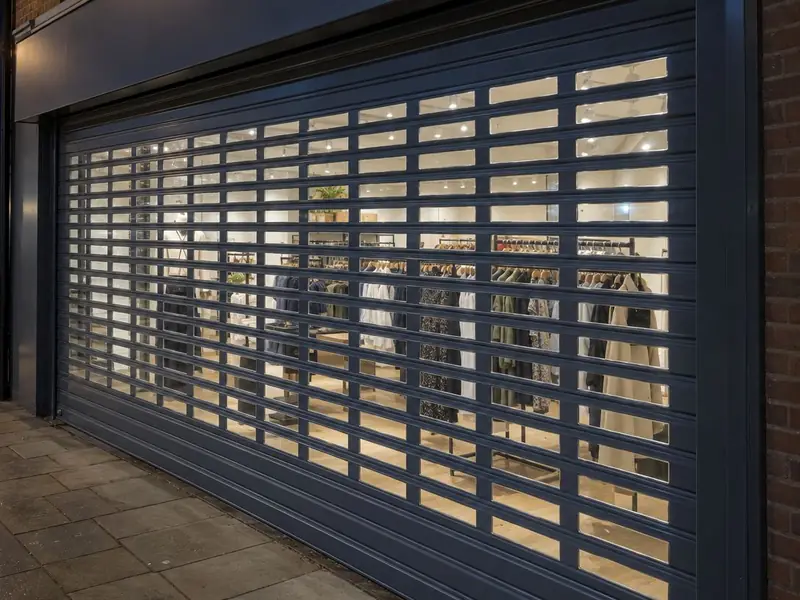
What our punched lath vision shutters include
Rows of polycarbonate windows in the laths give a clear view of the display.
- Steel laths punched with rectangular vision slots
- Window shopping stays possible after closing
- Concealed or under-fascia box options
- Clear polycarbonate inserts keep litter and hands out
| Vision | Clear view of the display |
|---|---|
| Inserts | Clear polycarbonate, replaceable |
| Curtain | Steel laths with polycarbonate-glazed slots |
More detail on our punched lath vision shutters page.
Prices for punched lath vision shutters in March
| Option | Guide price ex VAT | Inc VAT |
|---|---|---|
| Vision (punched lath), electric, box hidden behind the fascia | £2,695–£4,495 | £3,234–£5,394 |
| Vision (punched lath), electric, face-fit box Recommended | £2,195–£3,695 | £2,634–£4,434 |
| Vision (punched lath), electric, fitted inside behind the glass | £1,895–£3,395 | £2,274–£4,074 |
Guide prices, supply and fit, for a typical shopfront about 3 m × 2.5 m unless stated. Your fixed price is confirmed in writing after a free survey, before any work starts.
Do shutters in March need planning permission?
English councils generally expect a planning application before an external roller shutter goes on a shopfront, since the shutter alters the appearance of the building; shop shutters have no permitted development right. A shutter installed inside, behind the glazing, does not usually need permission.
If the building is listed, listed building consent is needed as well, and in a conservation area the council will look harder at the curtain type, box position and colour. A council shopfront guide, where one exists, is the best place to start.
How it works
Get in touch
Give us the postcode and what you are after. We confirm a survey slot and anything we need beforehand.
Measure and check
We confirm sizes, fixings and power on site, and note anything that affects planning or the box position.
Quote in writing
We send the specification and a fixed price in writing, with a deposit only on acceptance.
Installation and handover
We fit the shutter, test it with you, explain daily use and the override, and hand over warranty and service details.
Common questions
Will I need planning permission for a shutter in March?
An external shutter normally needs planning permission from the local planning authority, while internal shutters behind the glass usually do not. Listed buildings and conservation areas need extra care. We provide the shutter specification for your application.
How quickly can a shutter be fitted in March?
Shutters are made to measure after the survey and any planning approval, then most single shopfronts are fitted in a day. We confirm a realistic programme in writing with your quote rather than promising a date we cannot keep.
Can I have punched laths only at eye level?
Yes. Many shops have solid or perforated laths at the bottom and top, with vision laths in the band where people look into the window.
Do the polycarbonate inserts go cloudy?
Polycarbonate can dull over years of sun and cleaning. Gentle washing with water and a soft cloth helps, and individual inserts can be replaced without replacing the curtain.