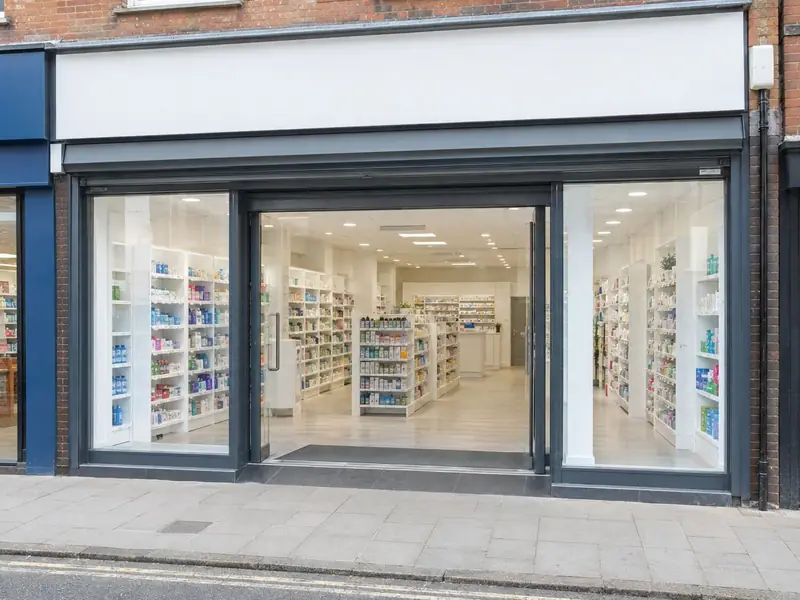
What pharmacies & chemists need from a shutter
- Medicines and high-value retail stock such as fragrances and skincare
- Controlled drugs on site, although their storage is governed separately from the shutter
- Dispensary areas that may need securing separately from the retail floor
- A need to look open and approachable as a healthcare premises
- Extended or varied opening hours, with locking up at different times
How do shutters fit into pharmacy security?
A shutter protects the building envelope: the glass, the door and, if fitted inside, the retail floor. It deters casual attack and delays a determined one. It does not replace the specific storage requirements for controlled drugs, which apply to the cabinet, safe or room where those medicines are kept. Treat the shutter as one layer alongside your CD storage, alarm, CCTV and stock procedures, and follow current regulatory guidance for pharmacy premises on everything else.
Pharmacies also hold plenty of ordinary retail stock that appeals to thieves, such as fragrances, cosmetics, skincare and branded health products, and this is often what a break-in is really after.
As a healthcare premises, a pharmacy also needs to look open and approachable. A frontage covered in solid steel for part of the day can send the wrong message, especially where opening hours are long or vary through the week. That is why appearance usually carries as much weight as strength when pharmacies choose a shutter.
Internal or external shutters for a pharmacy?
Both are common. An internal shutter sits behind the glass, so the frontage looks unchanged after hours and the box can hide behind a pelmet. Internal shutters usually do not need planning permission, although listed buildings need listed building consent for internal works. The trade-off is that the glass itself stays exposed.
An external perforated or punched-lath shutter protects the glass as well and still allows a view of a lit window. External shutters generally need planning permission, and councils often ask for the box to be concealed behind the fascia. Our guide to internal vs external shop shutters sets out the trade-offs.
Can the dispensary be secured separately?
Yes. A counter shutter can close off a dispensary counter or hatch while the rest of the shop stays open, or act as an extra layer behind the main shutter at the end of the day. Counter shutters are made to suit the opening and can be manual or electric. As a guide, they cost £695–£1,495 ex VAT supplied and fitted. Bear in mind that a counter shutter secures the opening; it is not a substitute for compliant storage of the medicines behind it.
Consultation rooms and back-of-house stores can be treated in the same way. Doorways can take a retractable grille, which folds away to the side during the day and locks across the opening at night. As a guide, retractable grilles cost £495–£1,195 ex VAT supplied and fitted.
What does a pharmacy shutter cost?
Guide prices for a typical shopfront of about 3 m × 2.5 m, supplied and fitted, ex VAT:
- Internal shutter: £1,395–£2,595
- Perforated electric shutter: £1,695–£2,895
- Punched lath / vision shutter: £2,195–£3,695
- Concealed fascia shutter: £1,995–£3,495
Each figure is confirmed as a fixed written price after a free survey, and VAT at 20% is added. If your insurer has asked for a particular security rating, tell us when you enquire so we can quote a suitable certified product.
Electric operation is common in pharmacies, because the shutter is opened and closed every day and often at different times. A manual override lets staff operate it in a power cut, and a battery backup unit is available as an option.
What we usually recommend
| Internal shop shutters | Fitted behind the glass, an internal shutter keeps the frontage looking professional and usually avoids planning permission, listed buildings excepted. |
|---|---|
| Perforated shop shutters | An external perforated shutter protects the glass while the lit window stays visible. |
| Counter & serving hatch shutters | A counter shutter can close off a dispensary counter or consultation hatch on its own. |
| Electric shop shutters | Motorised operation suits pharmacies with long or varied opening hours. |
Questions shop owners ask
Does a shutter meet the rules for storing controlled drugs?
No. A shutter secures the premises, but controlled drugs storage requirements apply to the cabinet, safe or room where those medicines are kept, and a shutter does not substitute for them. Check current regulatory guidance for pharmacy premises on CD storage. A shutter is best seen as an extra layer of physical security on top of those measures.
Will a shutter make the pharmacy look closed or unwelcoming?
A solid external shutter can, which is why many pharmacies prefer an internal shutter behind the glass, or an external perforated or punched-lath shutter. These keep the lit window visible after hours. During opening hours the curtain is rolled away into its box, and with a concealed fascia installation the box itself is hidden from view.
Can we fit a shutter if the pharmacy is in a listed building?
Possibly, but listed building consent is needed for works that affect the building's character, and that can include internal shutters as well as external ones. Councils usually prefer the least visible option, such as an internal shutter with a discreet box. Speak to the local planning authority early; pre-application advice can help before you commit to a design.