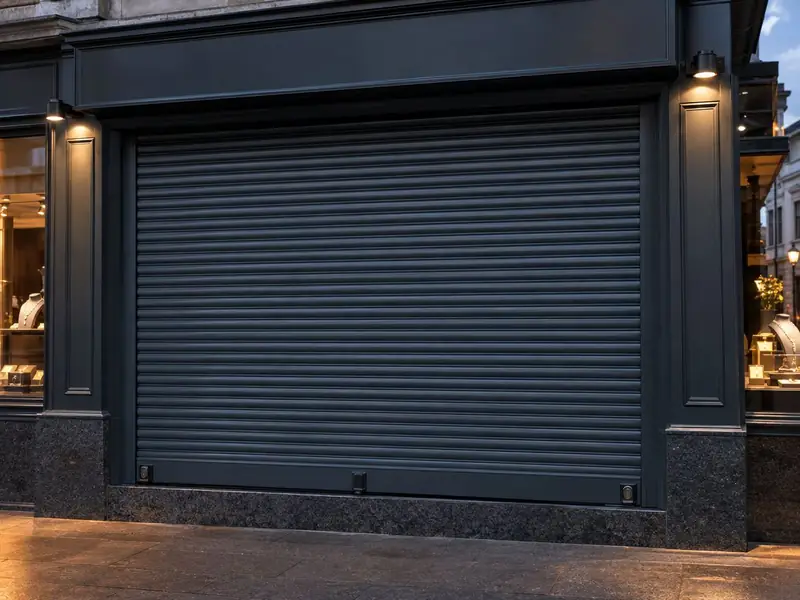
What phone & electronics shops need from a shutter
- Handsets, tablets and accessories that are small, valuable and easy to resell
- Customers' devices held overnight for repair
- Display windows showing high-value products after hours
- Smash-and-grab attacks on glass and doors
- Narrow frontages where the door and window share one opening
What security pressures do phone shops face?
Phone and electronics shops carry stock that is compact, valuable and easy to sell on, from handsets and tablets to headphones, smartwatches and chargers. Repair shops add another responsibility: customers' own devices, often holding personal data, may be left on the premises overnight. The window display is usually a key selling tool, so owners are reluctant to hide it completely after hours.
Many phone shops also occupy narrow units where the door and window sit within one opening. That affects whether a single shutter covers everything or the door and window are shuttered separately, and where the controls go.
Opening hours in phone shops often run into the evening, and staff numbers can be small, so the shutter should be simple for one person to operate. A heavy manual curtain that takes two people to lift is unlikely to suit.
Which shutter keeps the display visible but secure?
A punched-lath shutter with polycarbonate vision panels is a popular choice: the curtain is steel or aluminium, but the inserts let passers-by see a lit display. A perforated shutter gives a lighter view through small holes at a lower guide price. If you would rather show nothing at night, a solid shutter gives the most cover.
Inside, a retractable grille can lock off a stockroom door or sit behind the display window as an extra layer. Our guide on grilles or shutters for a shop compares the options.
For operation, an electric shutter with a key switch or radio remote is the usual choice, with a manual override for power cuts. A powder-coated finish in a RAL colour, typically £95–£295 extra ex VAT, can match your shopfront or brand.
Do phone shops need a higher-security shutter?
Not always, but it is worth checking your insurance policy, because conditions for electronics stock can be stricter than for general retail. Where a security rating is named, we can supply an LPS 1175 certified shutter and provide the certificate reference. Physical security works best as part of a wider routine: an alarm, CCTV, keeping the most valuable stock out of the window overnight, and locking repair devices away rather than leaving them on the bench.
If you take on a unit that already has an old shutter, have it checked before relying on it. Worn laths, loose guides and failing locks are common on shutters that have been neglected, and a repair or replacement may be needed.
How much does a phone shop shutter cost?
Guide prices for a typical shopfront of about 3 m × 2.5 m, supplied and fitted, ex VAT:
- Perforated electric shutter: £1,695–£2,895
- Punched lath / vision shutter: £2,195–£3,695
- Retractable grille: £495–£1,195
- LPS 1175 certified shutter: from £3,495
Your fixed price is confirmed in writing after a free survey, with VAT at 20% on top. External shutters generally need planning permission, so check with your local planning authority before ordering. Councils often prefer vision or perforated curtains to solid steel, which suits most phone shops anyway.
What we usually recommend
| Vision (punched lath) shutters | Vision panels keep promotional displays visible without leaving bare glass exposed. |
|---|---|
| Electric shop shutters | A motorised shutter with a key switch or remote makes opening and closing straightforward for small teams. |
| Retractable & roller security grilles | A retractable grille can secure a stockroom doorway or sit behind a display window as an inner layer. |
| LPS 1175 high-security shutters | If your insurer requires a rated shutter, we can supply an LPS 1175 certified product. |
Questions shop owners ask
Can customers still see our window display at night?
Yes, if you choose a vision or perforated shutter. Punched laths with polycarbonate inserts give a clearer view of the display, while perforated laths give a partial view through small holes and let light out. Solid laths hide the window completely. Councils often prefer see-through options for external shutters, which can also help at the planning stage.
Should the door and window have separate shutters?
On a narrow frontage a single shutter across the whole opening is often simplest. Separate shutters can make sense if you want to open the door first while the window stays covered, or if the frontage is too wide for one curtain. We look at the layout and the fixing positions available during the free survey.
Is a grille enough for a phone shop?
A grille can work well as an inner layer or for side and rear openings, but on its own it leaves the glass exposed to smash-and-grab attempts through the gaps. Most phone shops use a shutter on the frontage and may add a retractable grille inside. If your insurer specifies a rating, the product chosen will need to meet it.